
Our Restoration Principles
Not made new. Made beautiful again.
Some pieces do not need to be remade. They need to be understood.
A bracelet may carry the soft polish of years at the wrist. A silver box may hold the mellow glow of use. A pair of cufflinks may have waited quietly in a drawer, ready for the next evening, the next shirt, the next life.
At English Art Works, restoration is not about erasing age. It is about returning beauty, brightness and pleasure while keeping the character that makes a piece worth saving.
We care for jewellery, silverware, gentleman’s accoutrements and objets d’art with restraint. Some pieces are gently cleaned. Some are lightly polished. Some are sympathetically restored. Some are best left with the grace of age visible.
The aim is simple: beauty returned, character kept.
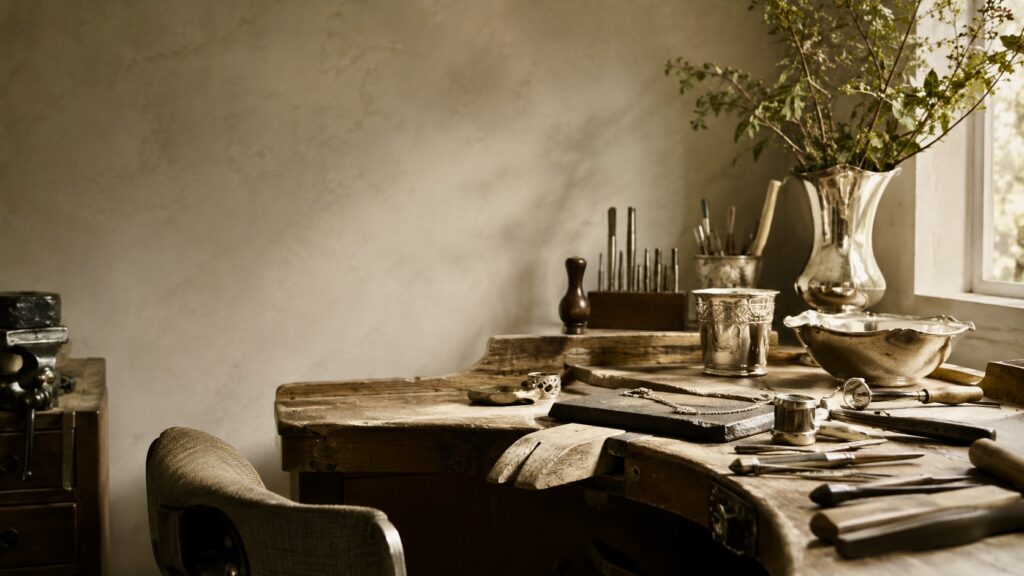
Restoration is not ordinary repair
Repair fixes what is broken.
Restoration asks a quieter question: what should be returned, and what should remain?
A clasp may need attention. A hinge may need care. A chain may need strengthening. A surface may need its brightness gently found again. But the best restoration does not overpower the piece. It respects proportion, age, workmanship and the charm of a former life.
A vintage piece should not be forced to pretend it is new. Its age may be part of its beauty.
Sympathetic restoration
English Art Works favours sympathetic restoration.
That means careful, restrained work guided by the piece itself. We look at form, surface, use, condition and character before deciding what, if anything, should be done.
Sympathetic restoration may mean a gentle clean. It may mean light polishing. It may mean a small repair so a piece can be worn or handled again. It may also mean leaving certain marks, patina or signs of age untouched because they belong to the piece.
Not every trace of time should be removed. Some traces are the romance.
The grace of age
Age can be graceful.
Vintage and antique pieces often carry small signs of their former life: light surface marks, softened edges, mellow silver, worn engraving, old polish, gentle patina or the touch of previous ownership.
These details should not automatically be treated as flaws. They can give a piece warmth, depth and character.
A locket that has been kept close, a bracelet that has been worn, a silver case that has passed from hand to hand — these pieces hold more than material value. They carry feeling.
Where age adds beauty, we respect it. Where wear affects condition, structure or use, we describe it clearly.
Brightness without erasure
Polish can return beauty, but it must be used with judgement.
Silver, gold and other precious surfaces should not be polished simply for the sake of shine. Too much polishing can soften detail, reduce definition, disturb patina or make a vintage piece look falsely new.
English Art Works approaches brightness carefully.
A piece may be gently cleaned. Silver may be lightly polished. Tarnish may be softened where appropriate. But character should not be stripped away in pursuit of perfection.
The right brightness is not harsh. It is quiet, warm and suited to the piece.
When repair is necessary
Sometimes repair is part of care.
A link may need attention. A clasp may need to close properly. A hinge may need strengthening. A stone may need securing. A fitting may need to be replaced or restored so the piece can return to wear, use or display.
When repair is needed, it should serve the piece rather than dominate it.
English Art Works does not use romance to hide repair. Where repair, replacement, alteration or restoration is known, it should be described clearly.
Beauty matters. So does honesty.
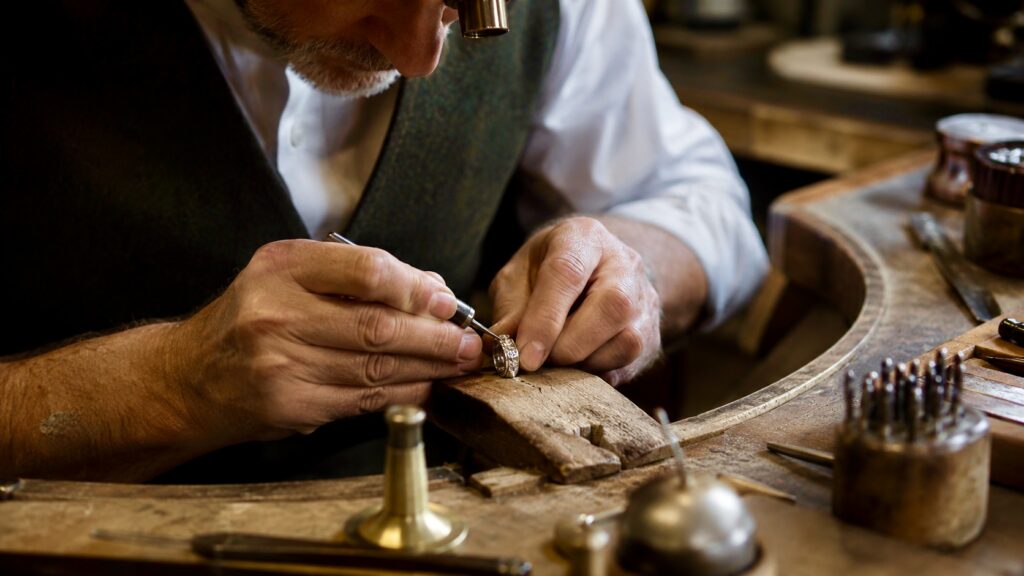
Jewellery, silver and personal pieces
Different pieces ask for different forms of care.
Jewellery belongs close to the body: rings to the hand, bracelets to the wrist, lockets near the heart, chains and charms to private rituals of dressing and keeping.
Silver belongs to rooms, tables, trays, desks, pockets and dressing tables. It carries light in a different way: through polish, weight, reflection and use.
Gentleman’s accoutrements — cufflinks, chains, cases, key rings, money clips and small personal pieces — belong to the details of dress and habit. They are often small, but never without presence.
Objets d’art ask to be considered as individual things: curious, decorative, charming, witty or quietly beautiful.
The principle remains the same: care should suit the piece.
What we do not hide
A beautiful description should never disguise condition.
If a piece has wear, restoration, repair, replacement parts, polishing loss, dents, scratches, worn marks, missing detail or uncertainty, those details should be described with care.
Where hallmarks, maker’s marks, date letters or material marks are visible, they should be recorded clearly. Where marks are worn or uncertain, the language should remain cautious.
Romance belongs in the feeling of the piece. Precision belongs in the condition note.
Beautiful pieces, honestly offered
English Art Works is drawn to pieces with beauty, character and feeling: jewellery to be worn again, silver to be placed and admired again, personal pieces to return to the cuff, pocket, desk, tray or dressing table.
Some are antique. Some are vintage. Some are simply too charming to leave behind.
Our restoration principles are not about making everything perfect. They are about knowing when to brighten, when to restore, when to repair and when to leave well alone.
Beauty first.
Care second.
Process last.
Precision always.
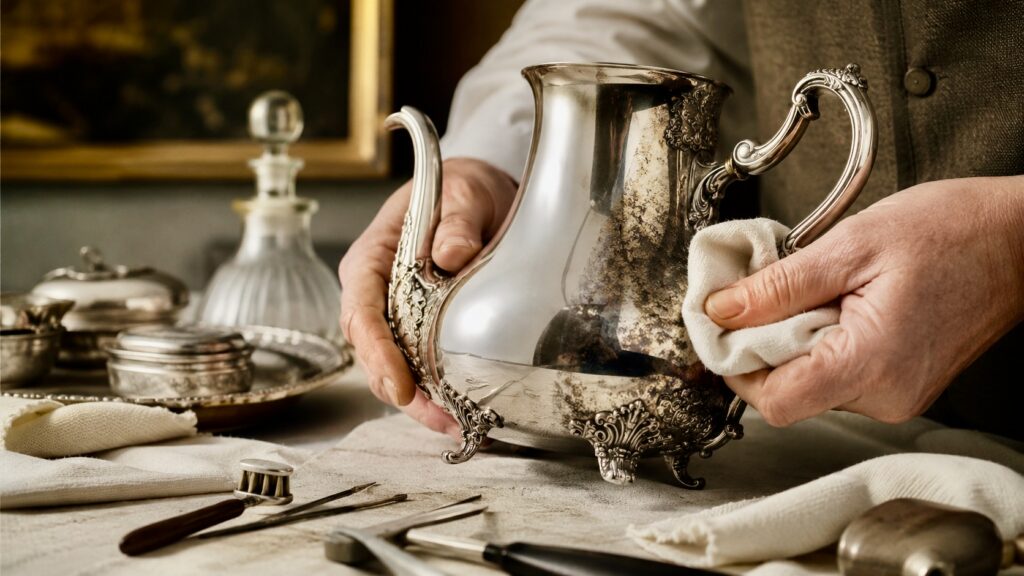
Frequently Asked Questions
What is sympathetic restoration?
Sympathetic restoration is careful work carried out with respect for the age, character and original feeling of a piece. It may include cleaning, light polishing, minor repair or restoration, but it should not make a vintage or antique piece appear falsely new.
Is restoration the same as repair?
No. Repair usually fixes a specific fault, such as a clasp, hinge, link or fitting. Restoration considers the whole piece: its beauty, age, surface, proportion, use and character.
Should vintage jewellery look new after restoration?
Not necessarily. Many vintage pieces are more beautiful when they retain gentle signs of age and previous ownership. The aim is not artificial newness, but beauty with character.
Should antique silver be polished?
Sometimes, but carefully. Silver can be brightened, but excessive polishing may soften detail or remove desirable patina. The right approach depends on the piece.
What is patina?
Patina is the surface character that can develop with age, handling and time. On silver, jewellery and other pieces, patina may add depth and warmth. It should not always be removed.
Will signs of age still be visible?
Often, yes. Light surface marks, mellow patina, softened detail or gentle traces of use may remain. Where age, wear or restoration affects condition, it should be clearly described.
Does English Art Works authenticate pieces?
English Art Works describes visible marks, materials and available evidence carefully. It does not make unsupported claims of provenance, maker attribution or authentication.
