
Vintage Emerald and Diamond Five Stone Rings: A British Jewellery Tradition
Before jewellery became increasingly defined by designer names and consumer-facing brands, much of Britain’s fine jewellery was sold through a different system. Independent and High Street jewellers selected finished pieces from established manufacturers and wholesalers, offering them to customers under the identity of their own shops.
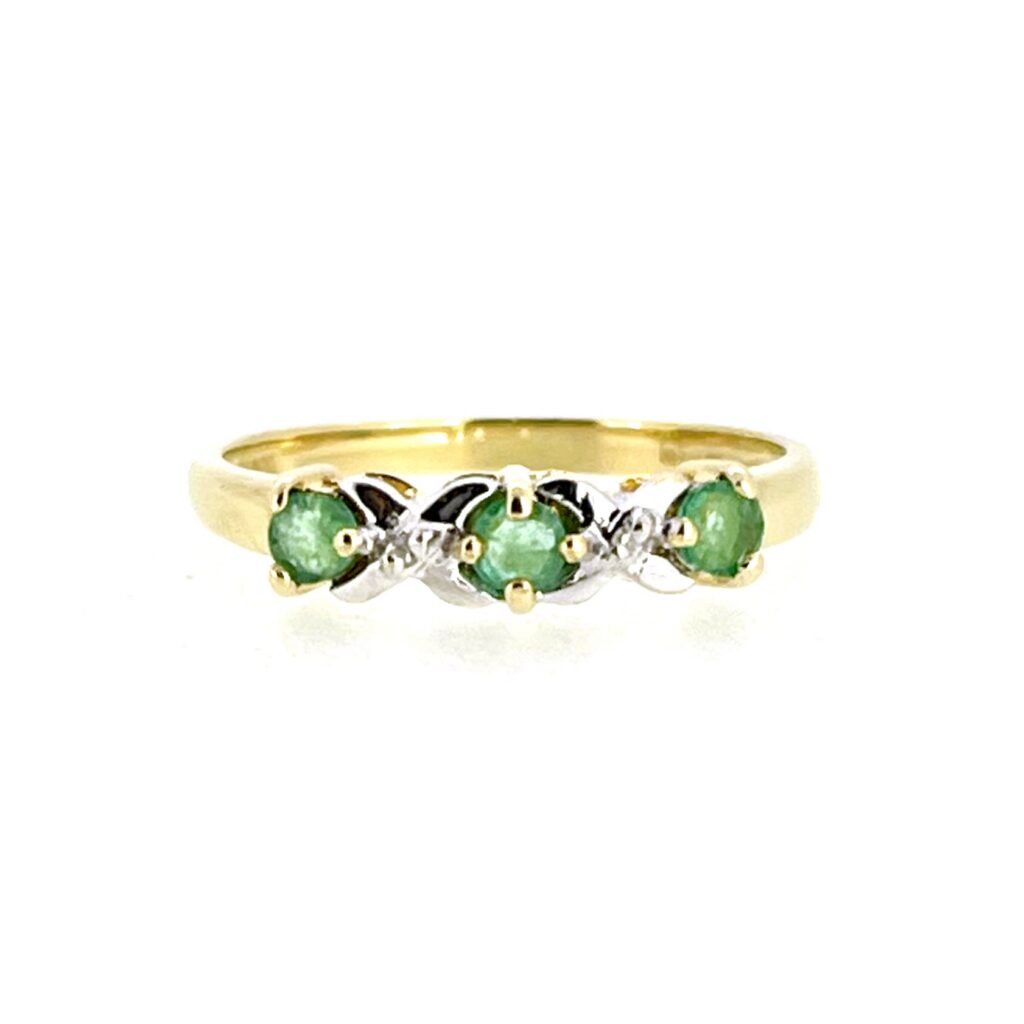
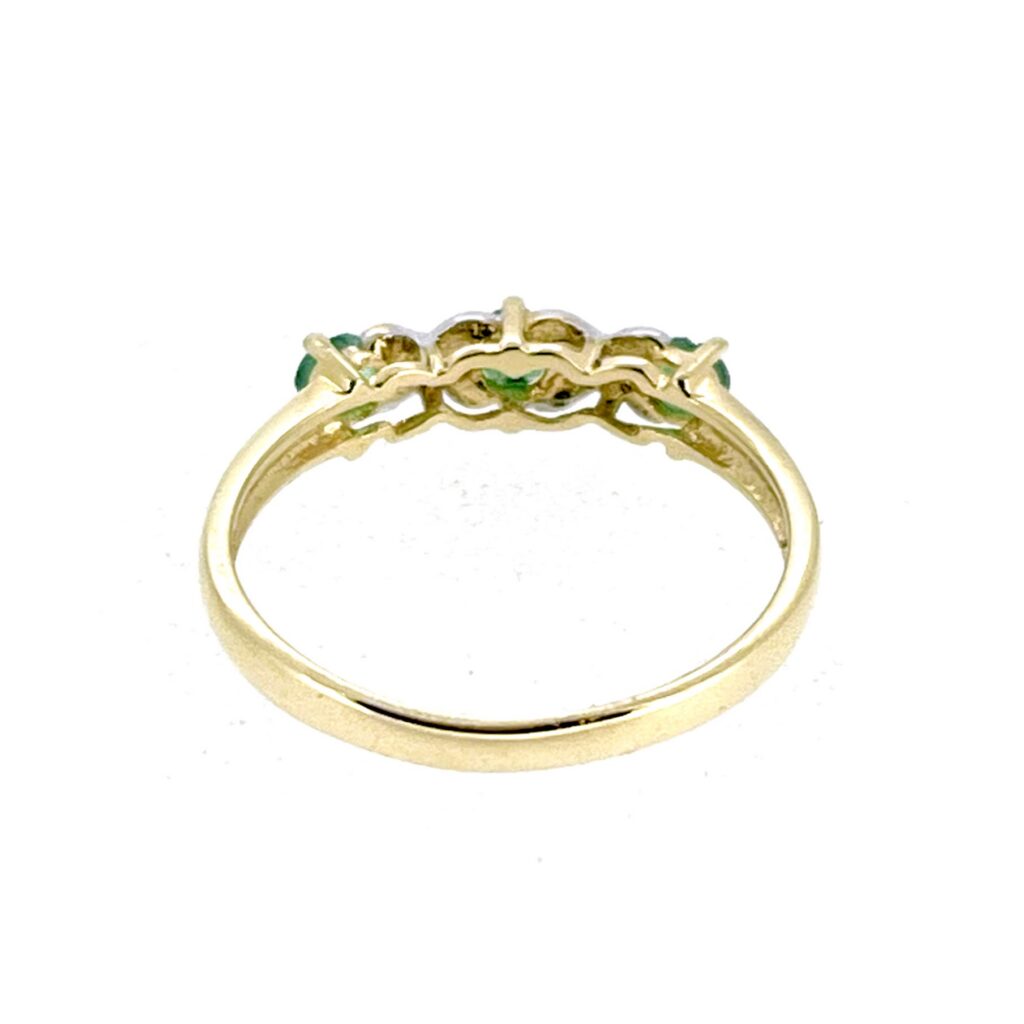
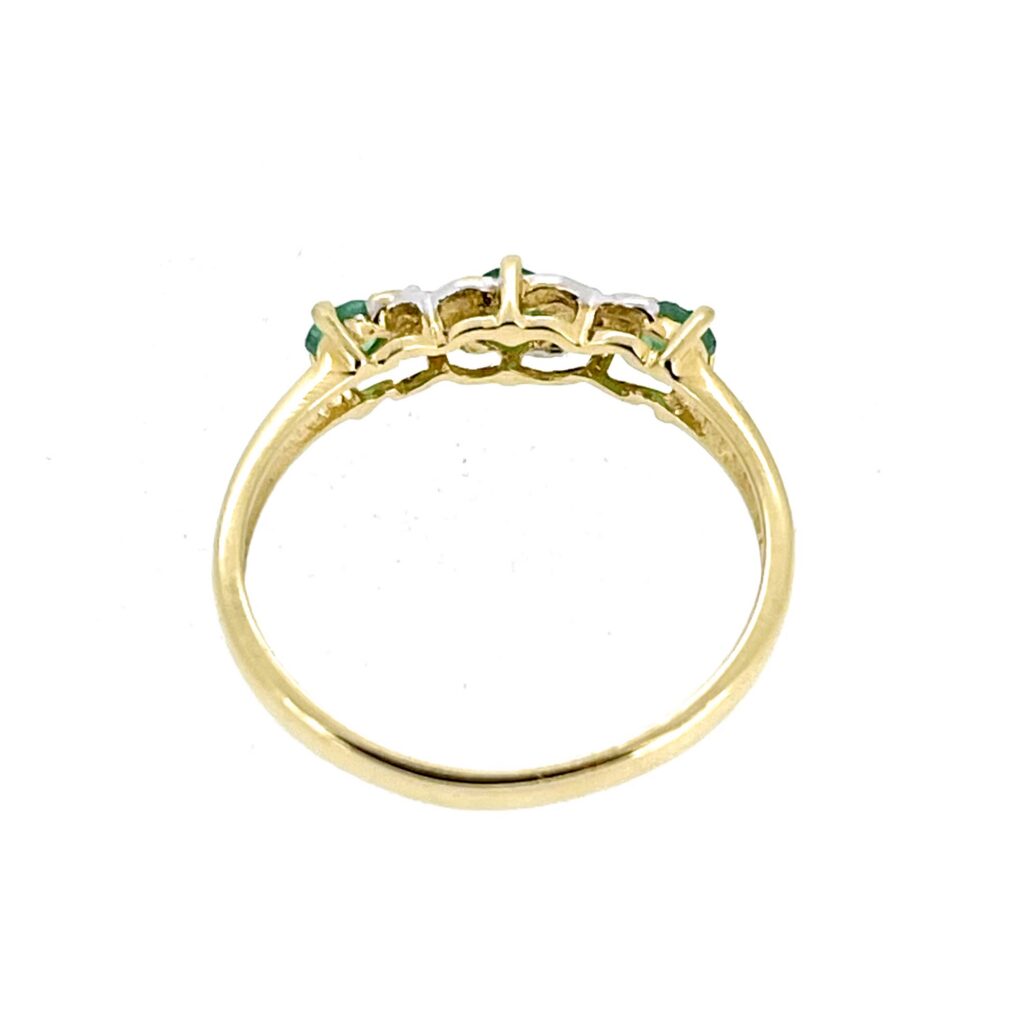
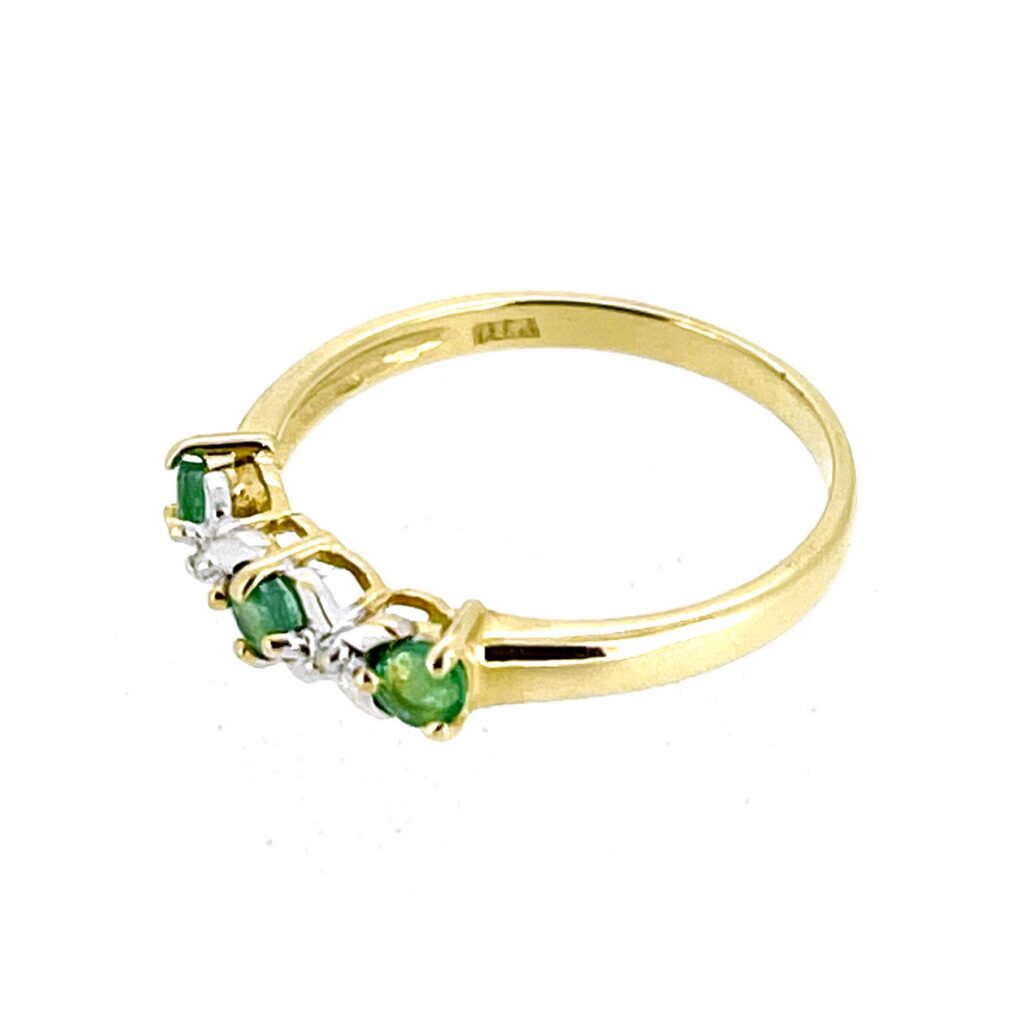
A vintage 9ct gold emerald and diamond ring recently restored by English Art Works provides an interesting example of this tradition. Set with three round-cut emeralds and two small diamonds, it combines a familiar five-stone design with the discreet maker’s marks of Gallery Abbeycrest, a name once associated with one of Britain’s largest jewellery manufacturing and supply businesses.
The Traditional Five Stone Ring
The five-stone ring has long been an established form in British jewellery. Its defining characteristic is a sequence of five gemstones arranged across the front of the band, creating a balanced composition that can incorporate matching stones, alternating colours or contrasting precious gemstones.
Diamonds are frequently associated with this arrangement, but coloured gemstones have also played an important role. Emeralds, rubies and sapphires introduce colour while allowing smaller diamonds to provide contrast and additional brilliance.
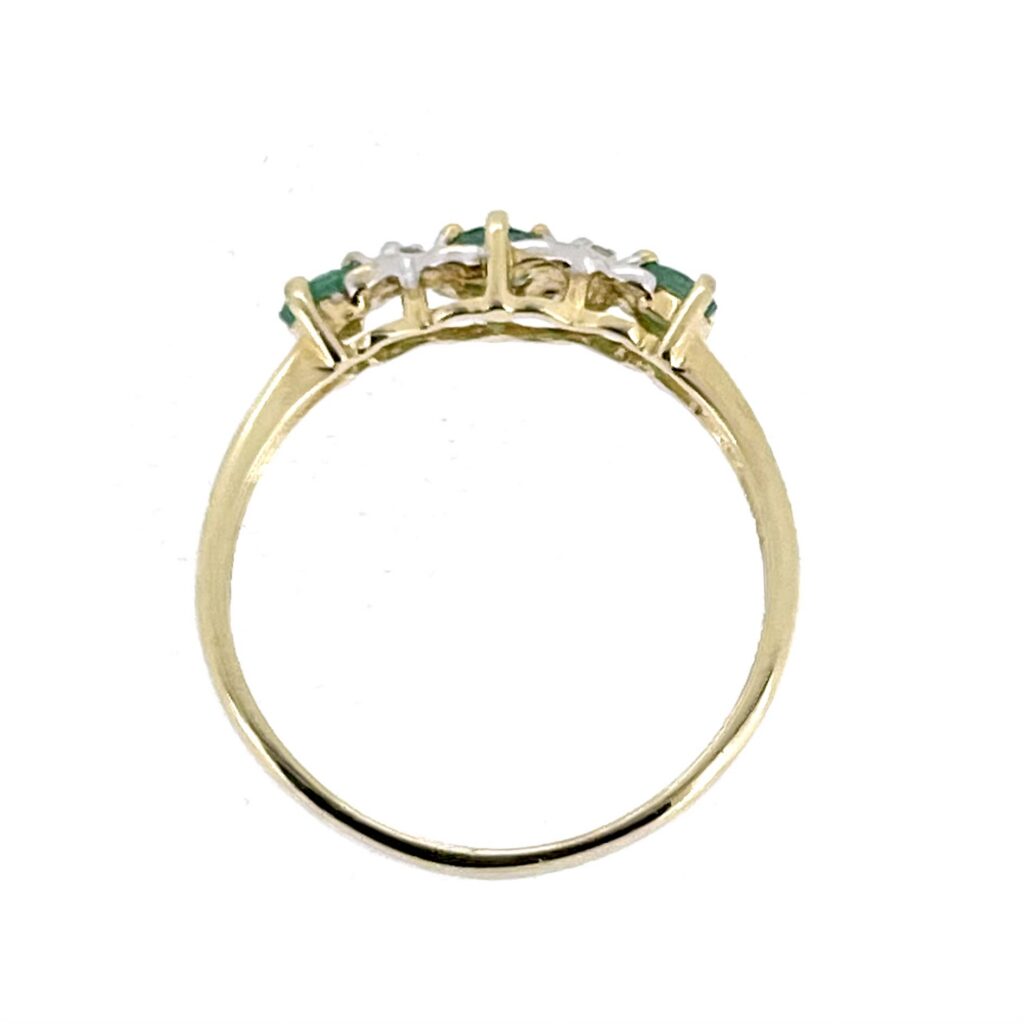
In this particular design, three round-cut emeralds are separated by two small diamonds. The emeralds provide the principal colour, while the diamonds act as restrained accents rather than competing focal points.
The result is a delicate variation on the traditional five-stone arrangement, offering the visual rhythm of alternating gemstones within a slender gold setting.
Emeralds, Diamonds and Yellow Gold
Emeralds have been valued in jewellery for centuries, particularly for their distinctive green colour. Their appearance can vary considerably, from lighter and more translucent greens to deeper, more saturated shades.
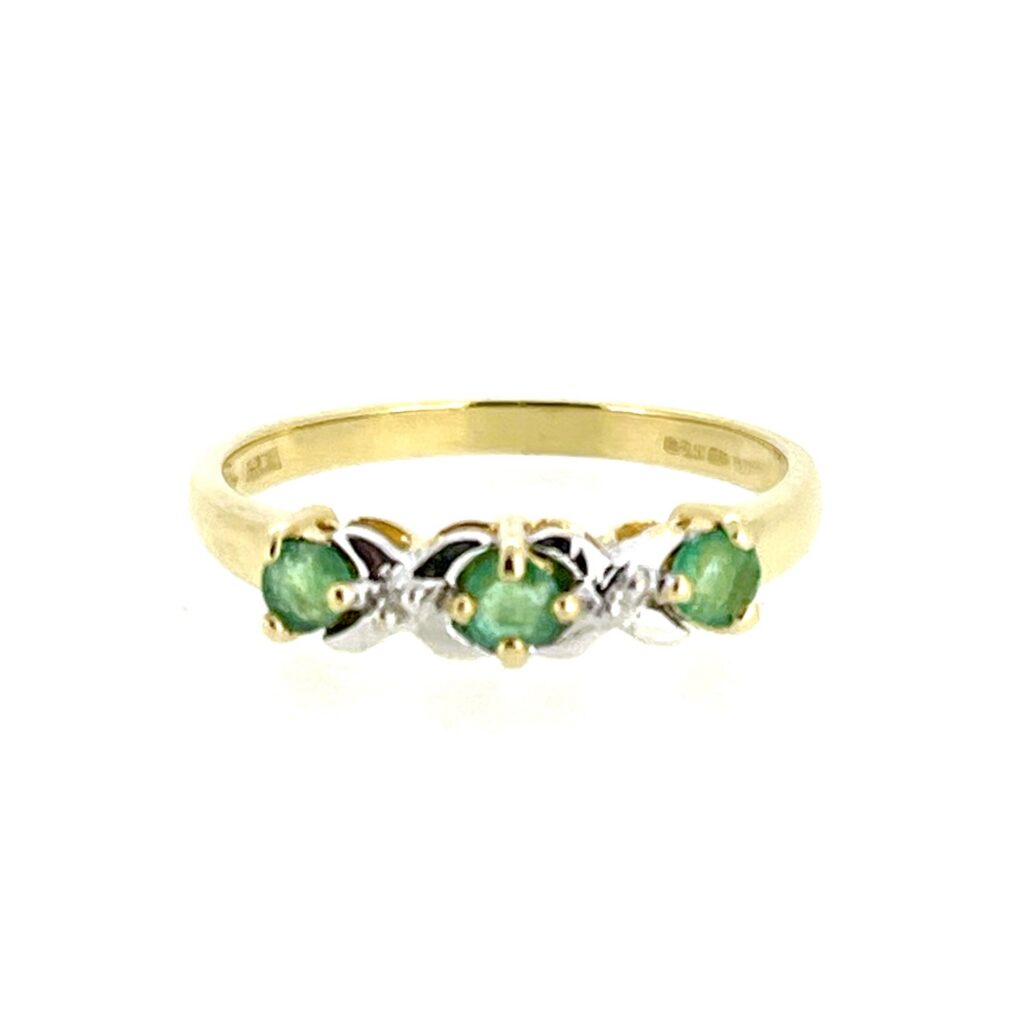
Yellow gold provides a traditional setting for emeralds, its warmth complementing the green gemstones. Small diamonds can introduce additional contrast, particularly when positioned within white-metal decorative settings.
The Gallery Abbeycrest ring uses this relationship effectively. Three emeralds, each measuring approximately 2.5mm in diameter, are held within yellow gold claw settings. Between them sit two diamonds measuring approximately 1mm each, accompanied by contrasting white-metal details.
The gemstones are modest in scale, but their arrangement creates a recognisable and balanced design. The interest comes from colour, proportion and the careful positioning of the stones rather than from excessive size or ornament.
A Slender 9ct Gold Setting
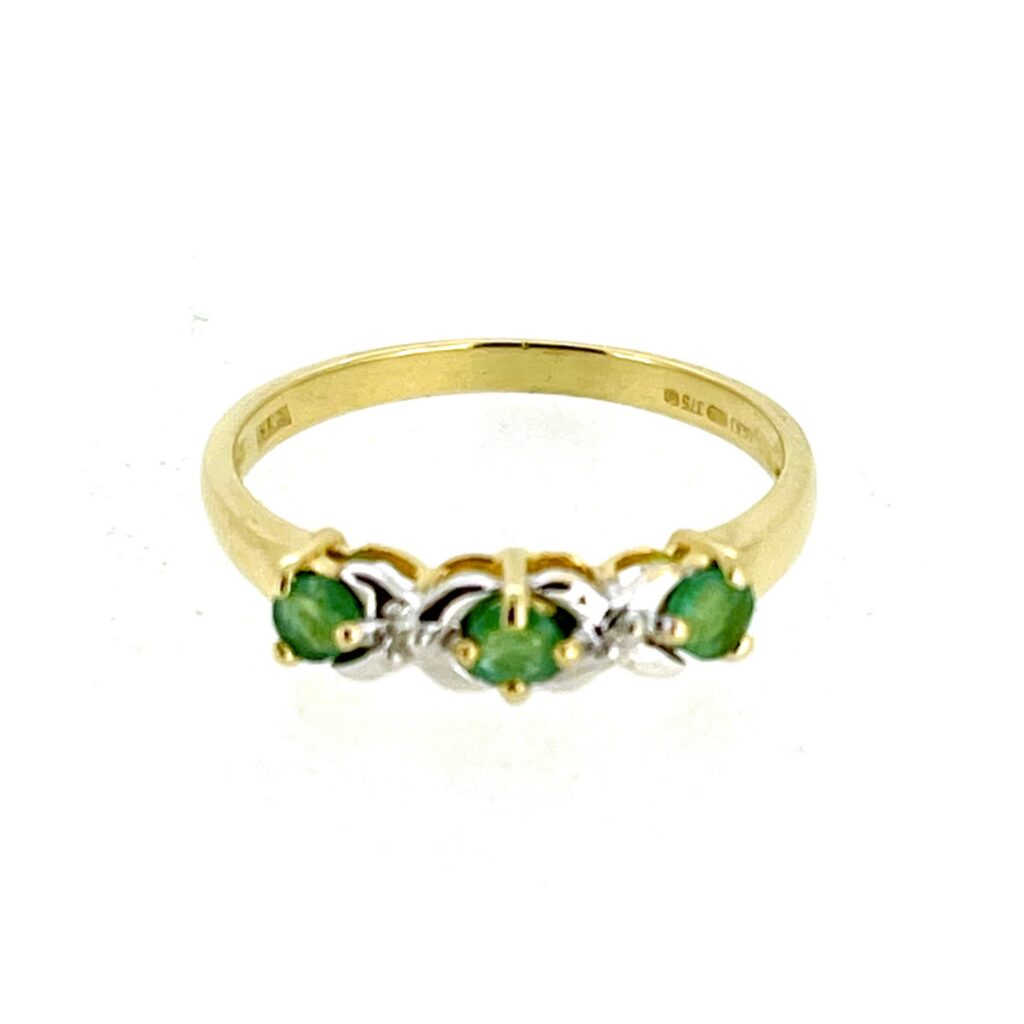
The ring is crafted in 9ct yellow gold, a material widely used in British jewellery because it offers the appearance and character of gold in a practical alloy suited to many traditional ring designs.
Its band measures approximately 2mm wide and is formed with a D-shaped section, giving the outside of the shank a gently rounded profile.
The gemstone setting rises approximately 3.8mm above the finger, creating a modest raised arrangement that allows the emeralds and diamonds to remain visible without dominating the slender band.
With a total weight of approximately 1.3g and a UK ring size L, the proportions are characteristic of a delicate gold gemstone ring rather than a heavier statement design.
Gallery Abbeycrest and British High Street Jewellery
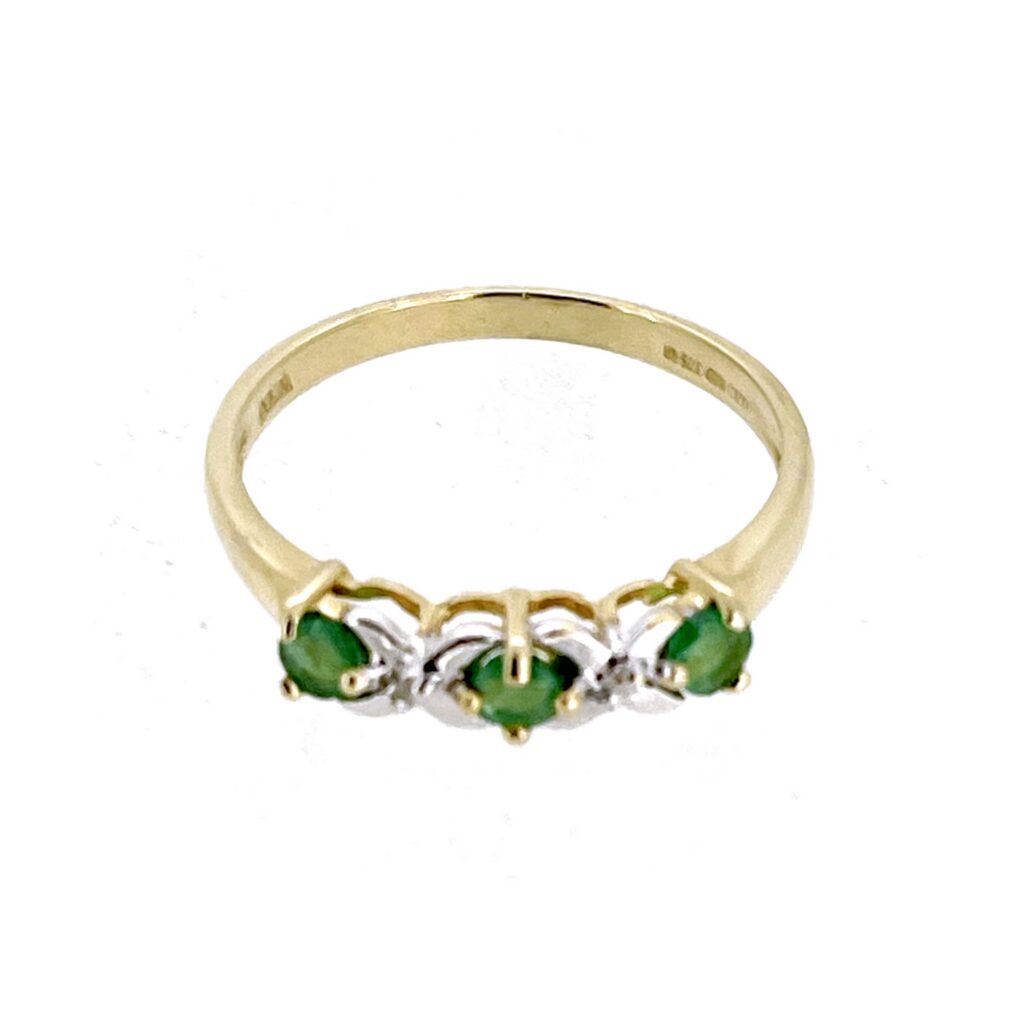
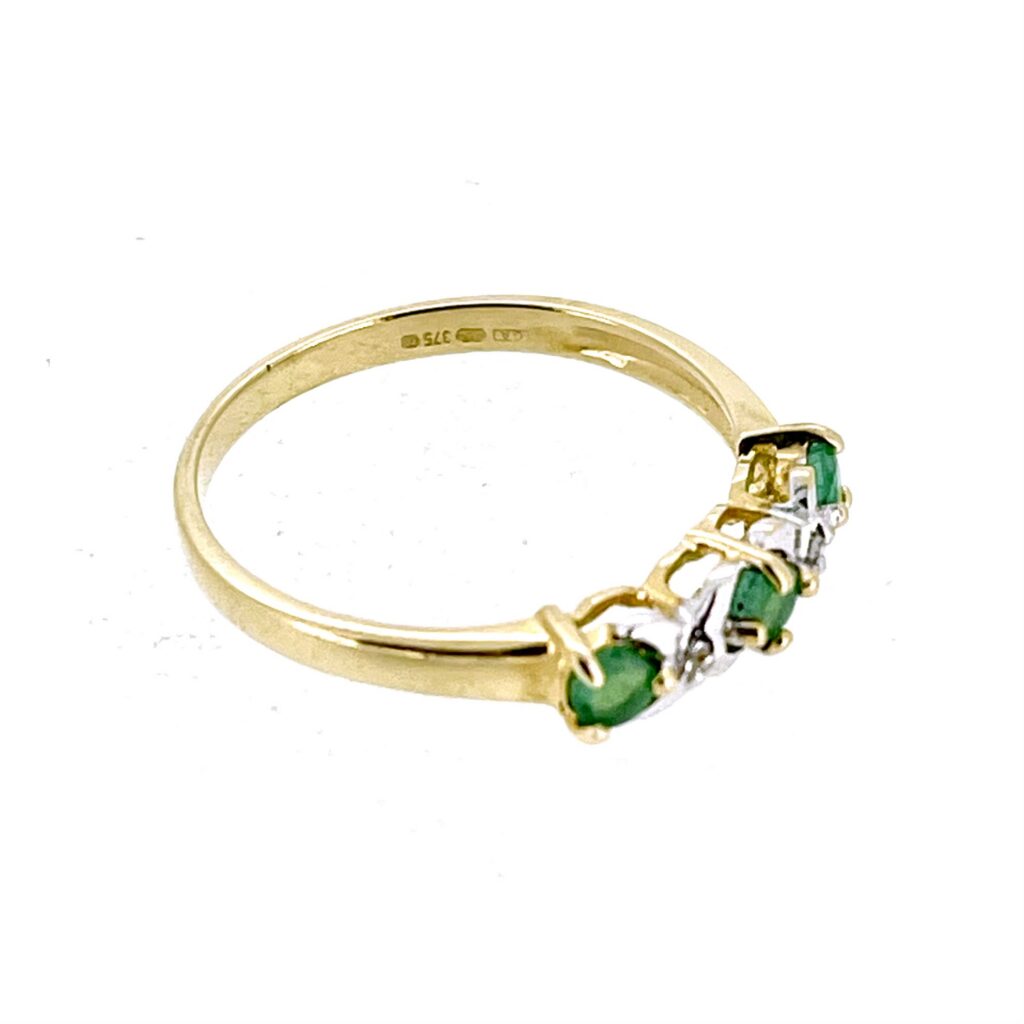
One of the most interesting details of this ring is the GA sponsor’s mark inside the shank, associated with Gallery Abbeycrest.
Gallery Abbeycrest was connected with Abbeycrest, a major British jewellery manufacturing and supply group. At its height, Abbeycrest was among the country’s largest suppliers of gold and silver jewellery, producing and distributing pieces for the established retail trade.
This distinction between manufacturer and retailer is important when studying vintage British jewellery.
For much of the twentieth century and into the early 2000s, customers visiting a High Street jeweller were not necessarily purchasing jewellery advertised under the manufacturer’s name. Instead, jewellers bought finished rings, necklaces, earrings and other pieces from specialist trade suppliers.
The jewellery would be displayed and sold under the retailer’s own identity, often presented in boxes bearing the shop’s name. Customers might have known and trusted their local jeweller for decades without ever encountering the name of the business that manufactured the jewellery.
The maker’s or sponsor’s mark inside a ring can therefore be one of the few surviving links to its original commercial history.
In the case of this emerald and diamond ring, the GA mark provides a connection to the Gallery Abbeycrest trade, although the identity of the original retailer is unknown.
Understanding the GA 375 Hallmark
The ring is marked GA and 375. The number 375 denotes 9ct gold, containing 375 parts of pure gold per thousand.
The GA mark is associated with Gallery Abbeycrest and provides a useful attribution to the jewellery manufacturing and supply trade.
No date letter has been identified on this example, so the exact year of manufacture remains unknown. Its design and commercial context are consistent with the type of jewellery retailed in Britain during the later twentieth and early twenty-first centuries.
This is an important distinction when researching vintage jewellery. A hallmark can identify the fineness of a precious metal and, where the relevant records are available, help establish the sponsor responsible for submitting the piece for assay. It does not necessarily identify the retail jeweller or the individual craftsman who made it.
The Changing British Jewellery Trade
The history of Gallery Abbeycrest also reflects wider changes in British jewellery retailing.
During the twentieth century, specialist manufacturers and wholesalers supplied extensive ranges of jewellery to independent shops and national retail chains. Many consumers chose pieces primarily for their materials, gemstones, design and the reputation of the retailer selling them.
As jewellery branding became more prominent, the manufacturer’s identity increasingly moved from the inside of the ring to the advertising, display and retail presentation of the finished piece.
Abbeycrest plc entered administration in 2012, bringing an end to an important chapter in the British jewellery supply trade.
Surviving jewellery associated with the business offers an opportunity to examine a period when large manufacturers could supply significant quantities of fine jewellery while remaining largely invisible to the eventual customer.
Restoring a Vintage Emerald and Diamond Ring
Vintage jewellery frequently benefits from careful restoration, particularly when years of wear have softened the appearance of polished metal surfaces.
At English Art Works, the Gallery Abbeycrest emerald and diamond ring has been professionally cleaned, polished and restored.
The work has returned the gold to a bright finish, allowing the yellow and contrasting white-metal details to complement the green emeralds and small diamonds.
The ring remains in excellent restored vintage condition, with no noticeable damage.
Restoration of this kind preserves the original design while preparing the jewellery for continued use. It is a practical way of extending the life of an existing piece without unnecessarily replacing the craftsmanship and materials already present.
Why Traditional Five Stone Rings Endure
The continuing appeal of the five-stone ring lies in its balance. Five gemstones provide enough repetition to create a coherent composition, while variations in colour, size and setting allow the form to take on very different characters.
In emerald and diamond examples, green gemstones offer the principal decorative interest while smaller diamonds introduce light and contrast.
This Gallery Abbeycrest ring is a particularly delicate interpretation of the design. Its slender 9ct gold shank, modest raised setting and carefully spaced gemstones produce an understated piece whose appeal rests on proportion rather than scale.
It also carries a history beyond the design itself. The GA marking connects the ring to the British jewellery trade of an earlier retail era, when manufacturers such as Gallery Abbeycrest supplied the jewellery sold by familiar High Street shops across the country.
For English Art Works, such pieces are worth preserving not only for their precious metals and gemstones, but also for what they reveal about British jewellery design, manufacturing and the changing relationship between maker, retailer and wearer.

Recent Comments